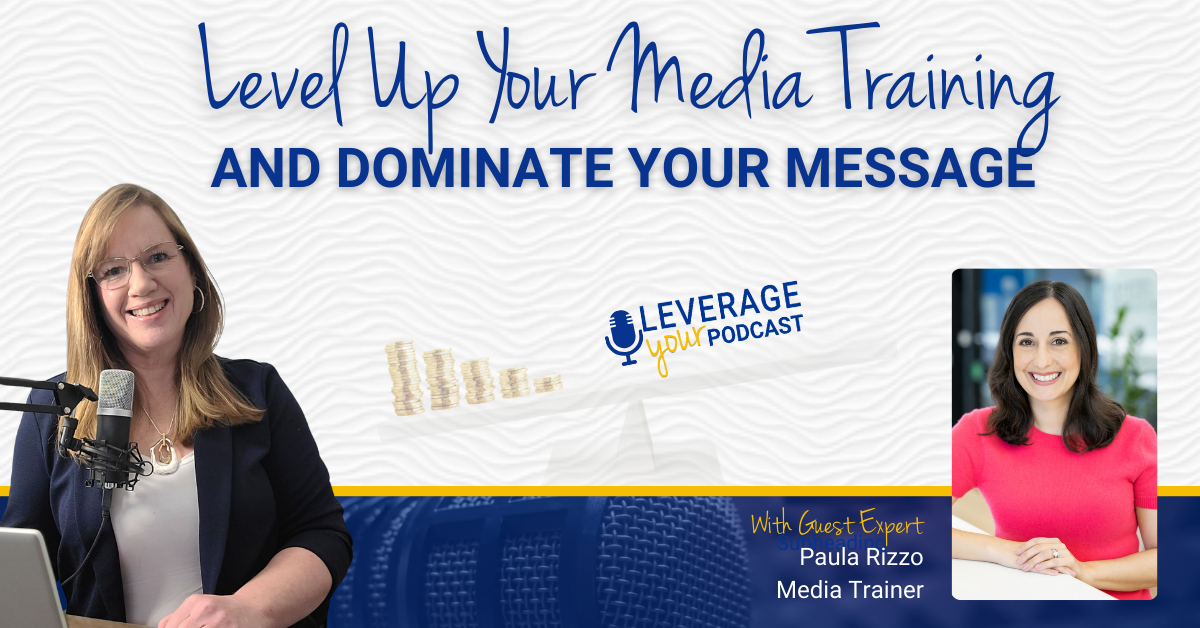
Level Up Your Media Training
Are you tired of feeling awkward and unprepared when you’re in front of a camera or microphone? Knowing how to present yourself effectively can make the difference between blending into the background and standing out as a confident expert. Media training is no longer just for TV personalities—it’s an essential skill for hosting or guesting on podcasts, even video marketing, reels and shorts!
In this episode, media expert Paula Rizzo breaks down the critical elements of presenting yourself with polish and purpose, from managing your background and body language to crafting compelling sound bites that capture your audience’s attention. By the end of this conversation, you’ll have practical, actionable strategies to transform your on-camera presence and communicate with clarity, confidence, and charisma.
Taste of what you’ll learn:
- The ‘accordion method’ to hook listeners and make hosts beg to have you back
- Practical preparation strategies to do before your next podcast interview
- How to command attention before saying a word – visual tricks that scream “expert” before you even speak
- Techniques to project power, passion, and persuasion with every single word
- Why virtual backgrounds could be killing your credibility and sabotaging your brand
- How strategic pauses can make your message unforgettable and keep the audience hanging on every word
Key Moments:
-
[00:01] | Media Training Basics and Evolution
-
[05:03] | Background and Setting Up Your Video Space
-
[9:15] | Voice Projection and Energy Techniques
-
[14:42] | Body Language and Camera Positioning Tips
-
[20:23] | Eliminating Filler Words and Creating Pauses
-
[23:29] | Crafting Effective Sound Bites
-
[26:11] | One-on-One Media Training Approach
Understanding Modern Media Training
Media training has evolved dramatically in recent years. What was once primarily focused on television appearances has transformed into a comprehensive skill set for digital content creators, entrepreneurs, and professionals across industries. The core goal remains the same: to communicate effectively, confidently, and authentically across various media platforms.
Crafting Your Visual Presentation
Your visual presentation is more than just looking good on camera. It’s about creating an intentional environment that reflects your personal brand. Consider your background carefully – it should have depth and tell a story about who you are. Avoid cluttered spaces or distracting elements that might pull attention away from your message.
Lighting and camera positioning are crucial. Position yourself centrally in the frame with some headroom above, and ensure your lighting highlights you naturally. While professional studio lighting isn’t always possible, you can still create a polished look with thoughtful preparation.
Mastering Your On-Camera Presence
Your voice and body language are powerful communication tools. Practice filling the room with your voice – speak with energy and conviction. Avoid monotone delivery by varying your tone and using deliberate pauses for emphasis. These techniques help maintain audience engagement and project confidence.
Be mindful of filler words like “um” and “like” that can undermine your authority. Practice creating intentional pauses instead of reflexively using these verbal crutches. Recording and reviewing yourself can help identify these communication habits.
The Art of Sound Bites
Develop a strategic approach to communicating your key messages. The accordion method is particularly effective: prepare short, medium, and long versions of your core points. This allows you to adapt to different interview formats and time constraints while ensuring you always communicate your most important ideas.
Practical Preparation Strategies
Preparation is key to media success. Practice your talking points out loud, record yourself, and review your performance. Pay attention to how you look, sound, and come across. Consider elements like makeup, clothing color, and overall presentation – what looks good in person might appear different on camera.
Technical Considerations
Don’t let technical challenges derail your performance. Familiarize yourself with your recording equipment, understand basic lighting principles, and be prepared to troubleshoot potential issues. Remember that authenticity matters more than perfection.
Continuous Improvement
Media training is an ongoing journey. Seek feedback, practice regularly, and be willing to adapt. Whether you’re podcasting, creating video content, or presenting in professional settings, these skills will serve you across multiple platforms.
Developing a strong media presence takes time and practice. Be patient with yourself, stay authentic, and focus on communicating your message clearly and confidently. With consistent effort, you’ll become more comfortable and compelling on camera.
About Paula:
Paula Rizzo is an Emmy Award-winning television producer, bestselling author of Listful Thinking & Listful Living, media-training coach, speaker, LinkedIn Learning Instructor, host of the live-stream show “Inside Scoop,” and creator of the popular online training Media-Ready Author. She also writes a regular column for Writer’s Digest and is a frequent on-air contributor on WPIX-NY.
Connect with Paula:
Grab Paula’s checklist for Becoming a Go-To Media Expert here https://paularizzo.com/Checklist
Let Me Help You Create Conversations That Convert