
Networking Hacks
Networking events make most people want to run for the hills, and honestly, who can blame them? Between the awkward elevator pitches, the desperate card swapping, and that sinking feeling that you’re doing it all wrong, traditional networking has become something we endure rather than enjoy.
The problem is that most networking advice comes from transactional industries where you sell once and disappear, but if you’re in B2B, that approach will get your teeth kicked in.
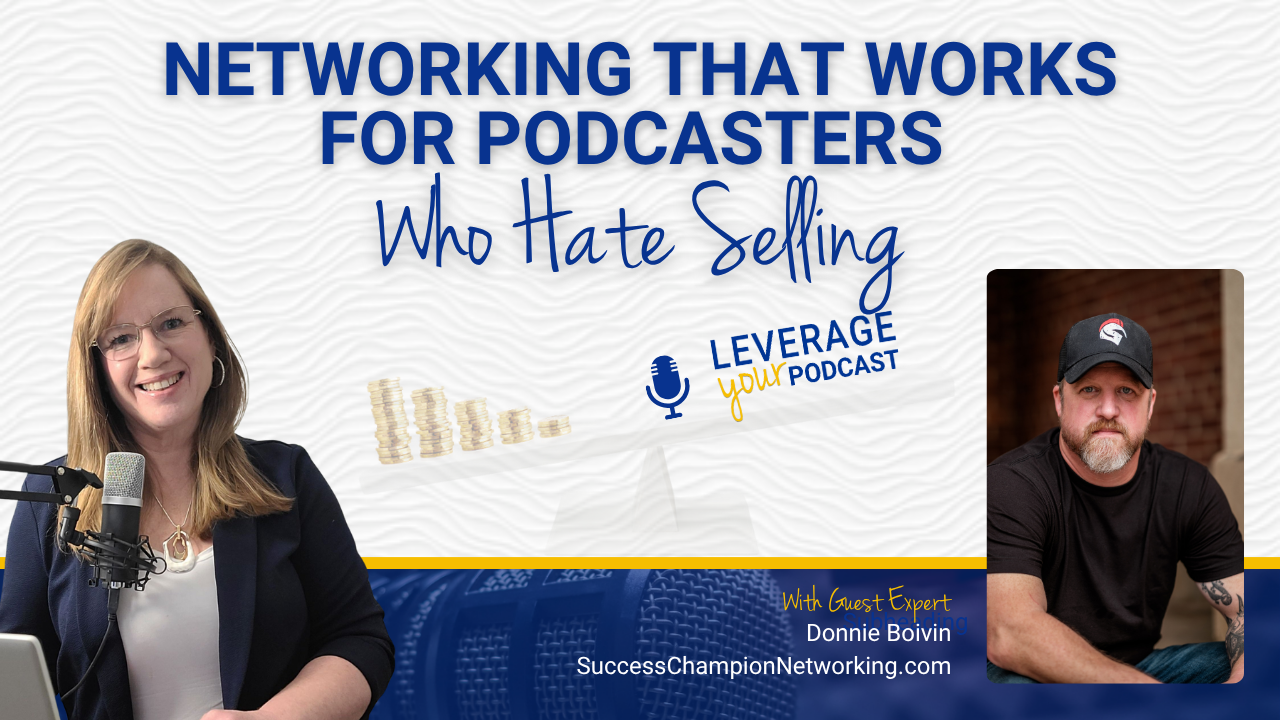
In this episode, Donnie Boivin breaks down exactly why networking is broken and shares the framework that actually works for building real business relationships. You’ll learn how to walk into any room and make it valuable, even if you’re an introvert who’d rather be anywhere else.
You’ll hear…
- Why traditional networking advice fails in B2B sales
- The five-word rule that stops you from accidentally pitching too early
- How Donnie’s client tripled her business by networking with a specific business niche
- Why asking for introductions instead of referrals changes everything in networking
- The adjacent business strategy that unlocks collaboration opportunities you’re missing
- How to identify if a networking group is worth your time in the first five minutes
- What happens when you force two strangers to create a collaboration in five minutes
Key Moments:
[01:12] Why Traditional Networking Advice Falls Flat in B2B
[03:36] The Problem with Elevator Pitches and 30-Second Commercials
[08:19] The Tuition Assistance Story That Changed Everything
[11:17] Why “Givers Gain” Might Be Hurting Your Network
[13:25] The Mary Kay Printing Deal and Finding Adjacent Partners
[17:21] How Industry-Specific Networking Groups Actually Work
[20:10] The Five-Minute Collaboration Challenge That Sparked Gold
The Fundamental Problem with Networking
Traditional networking has been taught by people in transactional industries like real estate, financial services, and banking. While these professionals aren’t bad people, their approach doesn’t translate well to business-to-business sales environments. When you sell a house, you might not need to speak with that client again for 10 to 20 years. But when you’re selling services to companies, you’re entering into a long-term relationship where you’ll interact with that client regularly, sometimes more than you see your own family.
This fundamental difference means that the tactics taught in traditional networking settings simply don’t work for B2B professionals. Walking up to a CEO of a multi-million dollar company and introducing yourself with a jingle or a rehearsed pitch is going to fall flat. The entire framework needs to be rebuilt from the ground up to make sense for how B2B relationships actually develop.
Rethinking Your Networking Goals
The biggest shift you need to make is understanding that you’re not networking for immediate referrals or clients. Yes, clients and referrals will come eventually, but that’s not why you’re in the room. In B2B sales, deals don’t close in one call. They take six months, 18 months, sometimes two years of conversation before anything gets done. Your networking efforts need to operate at the same speed and with the same patience.
When you attend networking events, your primary goal should be making introductions, not collecting business cards or pitching your services. Think about how many quality introductions you can facilitate before you leave. When you introduce people to each other without any expectation of immediate return, you create goodwill and become memorable. The law of reciprocity naturally kicks in, and people will want to help you in return.
The Five-Word Rule for Introductions
One of the most damaging pieces of advice in networking is the idea that you need an elevator pitch or a 30-second commercial. Anything beyond about five words becomes an unintentional pitch. You start explaining what you do instead of simply stating it, and this shift happens subconsciously. You’re hoping the other person will love what you’re saying and immediately want to buy from you.
Some professionals try to avoid the negative reaction they’ve experienced in the past by dressing up their title with fancy language. Financial advisors talk about legacy wealth creation and generational family money instead of just saying they’re financial advisors. But this approach backfires. If you were looking for someone to manage your money, would you trust the person who’s trying to hide what they do, or the person who’s so confident in their abilities that they own their title without hesitation?
The solution is simple: state your industry in the clearest, most direct terms possible, then immediately pivot to who you’d like to meet. Practice this until it becomes natural. Remember, in B2B environments, you’re going to see these same people repeatedly. What you say in your first introduction matters far less than you think.
Understanding Introductions Versus Referrals
There’s a critical distinction between introductions and referrals that most people miss. An introduction is simply connecting two good people who might benefit from knowing each other. There’s no sales agenda attached. A referral, on the other hand, is an introduction with a sales call built in. It’s when someone tells their contact all about you and sets up an expectation that you’ll be discussing business.
People are extremely protective of their client relationships, and rightfully so. If you meet someone for the first time and immediately ask to be introduced to their number one client, the answer will always be no. You haven’t earned that level of trust yet. But if you focus on making valuable introductions for others first, you build credibility and trust over time. Eventually, those referrals will come naturally because you’ve demonstrated that you’re someone worth knowing.

Finding Your Adjacent Industries
Instead of trying to network directly with your ideal clients, focus on connecting with people who sell to the same clients you do but aren’t your competition. Think about who has intimate conversations with your target market on a regular basis. A woman who helped families with tuition assistance was frustrated that she wasn’t getting referrals. The breakthrough came when she realized that bookkeepers were having regular conversations about finances with families who couldn’t afford college tuition. Once she started asking to meet bookkeepers instead of asking for direct client referrals, her business tripled within six months.
This concept of adjacent industries is powerful. If you sell commercial printing, don’t waste time trying to meet companies that need printing services at networking events. Instead, connect with people who sell promotional products. You’re both talking to the same buyer, you’re not competing with each other, and you can create collaborative relationships that benefit everyone involved.
Choosing the Right Networking Groups
Not every networking group is worth your time, and that’s okay. Sometimes you need to attend a meeting or two to figure out if it’s the right fit. There are some red flags to watch for that can save you time. If you walk into a room and see multi-level marketing representatives, that’s usually a sign that the group isn’t focused on the level of B2B sales you need. Similarly, if 90 percent of the room is selling business-to-consumer services like real estate or mortgages, you’re probably in the wrong place.
Even when a group advertises itself as B2B focused, ask them to define what that means. You’ll often find that their definition is different from yours. True B2B means you’re selling a service to the company itself, not to individuals who happen to work at companies. A life insurance agent who sells policies to employees isn’t really B2B, even though they might claim to be. Getting clear on these definitions upfront will help you find groups where you can actually build meaningful relationships.
The Power of Industry-Specific Networks
Generic networking groups have their place, but there’s something special about connecting with people who all sell into the same industry. When everyone in the room is focused on manufacturing, hospitality, government contracting, or medical devices, the conversations become much more valuable. You’re not just making random connections anymore. You’re building a community of people who understand the specific challenges and opportunities in your target market.
These focused groups create opportunities for creative collaboration that wouldn’t happen otherwise. When a merchant services provider and a corporate travel agent were put together and given five minutes to figure out how to collaborate, they created a package where companies that save money on merchant fees get sent on a corporate trip. That kind of creative thinking happens when people who serve the same market come together and push each other to think differently.
Preparing for Success
Preparation for networking doesn’t mean memorizing a script or rehearsing your pitch in front of a mirror. It means getting comfortable with stating what you do in simple terms and being clear about who you want to meet. Practice saying your industry and your ideal connection in less than five words each. The more specific you can be about who you want to meet, the easier it becomes for others to help you.
Remember that if you’re in B2B, these networking relationships develop over time. You’ll see the same people again and again. Your goal isn’t to be perfect in your first interaction. Your goal is to be genuine, helpful, and clear about how you can add value to others. When you shift your focus from what you can get to what you can give, networking stops feeling awkward and starts feeling natural.
About Donnie:
Donnie Boivin (Bo-Veen is the CEO of Success Champion Networking and Founder of the Badass Business Summit. A bestselling author, and award-winning speaker. Donnie is known for helping B2B professionals build real business through intentional, strategic networking. Under his leadership, SCN has become the fastest-growing virtual B2B networking community on the planet, focused on Community, Education, and Opportunity.
Named to Fort Worth’s 40 Under 40 and recipient of the City’s Impact Award, Donnie’s influence stretches from the boardroom to the barn, where he and his wife Elizabeth run their farm. Whether on stage or on the mic, he’s driving business owners to stop chasing leads and start building powerful referral networks that open the right doors.
Do networking events (in person or virtual) light you up or make you cringe? My guest Donnie BOVEEN of Success Champion Networking, says networking is broken. Hear how, what makes a networking event a win-win for all, and how to show up ready to triple your business without being salesy.
Connect With Donnie:

When used effectively, your podcast interviews should provide you with a wealth of valuable content that will help you attract and convert your ideal clients. It should help give you oodles of consistent content, help you be more visible, showcase your authority, grow your list, build an audience, and generate clients.
BUT simply posting that a show is live is NOT enough. You need to be STRATEGIC and CONSISTENT.
We are looking for 2 podcast guests who are running six-figure businesses, who know their audience and want to be more visible and attract their ideal clients faster with consumable, repurposed content. The best part – it’s DONE FOR YOU without any headaches or delays.


